
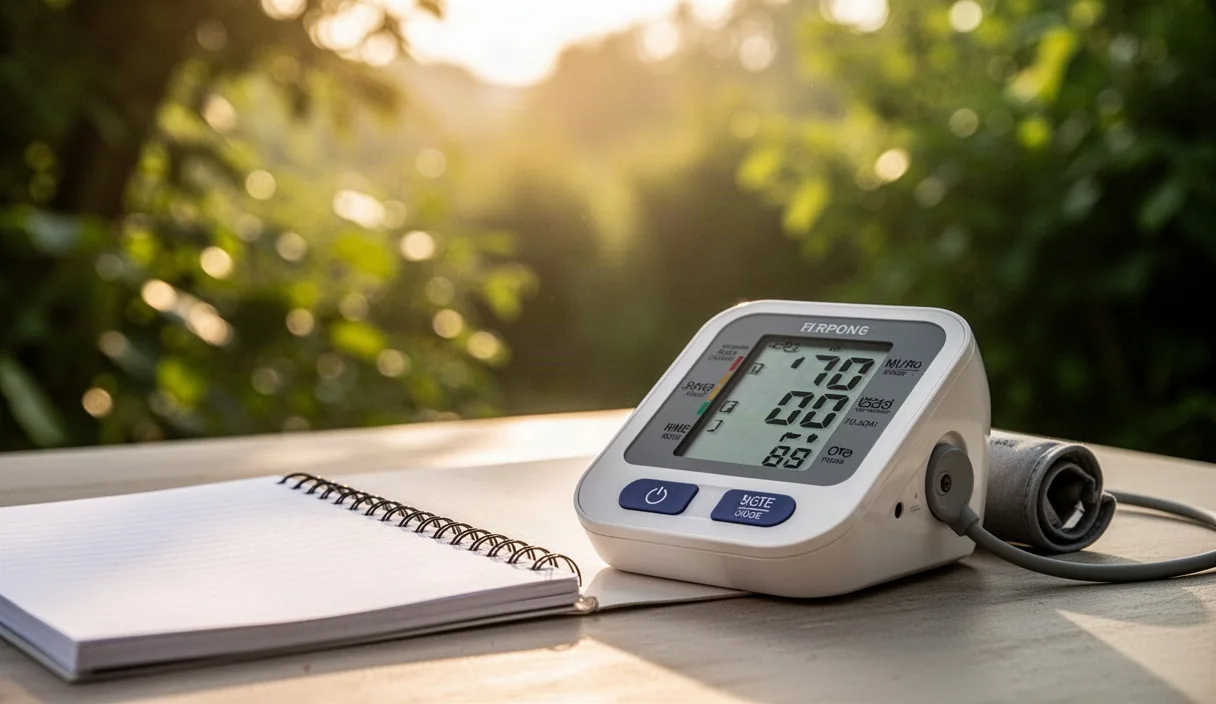
Why does a blood pressure reading taken at the doctor's office sometimes say 148/92, while the same arm, measured an hour later at home, says 126/78? That is not a broken machine or a lucky guess. Blood pressure is not a fixed number like your height. It is closer to your speed while driving: it changes constantly depending on what you are doing, how you feel, and what just happened five minutes earlier.
This matters because blood pressure numbers are used to decide whether someone needs medication, more monitoring, or nothing at all. If the number bounces around depending on where and how it is taken, the question "which number should I trust" becomes a practical one, not a philosophical one. This article walks through what actually happens during each type of reading, why the gap between home and clinic numbers exists, and how to use both sets of numbers in a way that gives a doctor something useful to work with.
Why Blood Pressure Readings Vary So Much
Blood pressure is the force of blood pushing against artery walls, and that force shifts within minutes based on posture, stress, temperature, recent food or caffeine, a full bladder, or even talking during the measurement. Studies on repeated same-day readings show swings of 10 to 20 points systolic (the top number) are common in a single person over the course of a few hours, without anything being medically wrong.
Think of it like checking your weight. Step on a scale first thing in the morning, then again after a large meal and a glass of water, and the number moves, even though your actual body has not changed in any meaningful way. Blood pressure works similarly: the underlying cardiovascular system is fairly stable day to day, but the momentary reading reflects a mix of that baseline plus whatever is happening right now.
Three factors explain most of the difference between a clinic number and a home number:
- Timing: clinic visits often happen after driving, parking, waiting, and walking to the exam room, all of which nudge blood pressure up.
- Posture and rest: a proper reading requires sitting still with feet flat and back supported for at least five minutes beforehand, which rarely happens in a busy waiting room.
- Emotional state: anticipating a medical conversation, even a routine one, raises blood pressure in a large share of people, sometimes called situational anxiety.
What Happens During a Clinic Reading
A typical clinic visit compresses a lot into a few minutes: check-in, a walk to the exam room, sometimes a change of clothing, then a cuff going on almost immediately. The American Heart Association's guidance calls for five minutes of quiet sitting before the reading, but in practice this step is often shortened or skipped because appointments run on tight schedules.
The cuff itself matters too. If the cuff size does not match the arm, the reading skews in a predictable direction: a cuff that is too small reads too high, and a cuff that is too large reads too low. A 2021 study found that roughly one in four adults were measured with an ill-fitting cuff in routine clinical settings, most often because a standard-size cuff was used on a larger arm.
Talking during the measurement, a crossed leg, an unsupported arm hanging below heart level, or a full bladder can each shift the systolic number by 5 to 15 points. None of these are errors in the sense of a broken device, they are simply conditions that clinics, moving quickly through a full schedule, do not always control for.
What Happens During a Home Reading
A home reading, done correctly, removes several of the clinic's built-in disruptions. There is no drive, no waiting room, no unfamiliar staff. The person can sit in a familiar chair, rest for the recommended five minutes, and take the reading without small talk happening at the same time.
Home readings also allow something a single clinic visit cannot: repetition across different times of day. Blood pressure naturally follows a daily rhythm, often lower during sleep, rising in the morning, and settling through the afternoon. A single clinic number is one frame from a movie; a week of home readings is the whole scene.
That said, home readings introduce their own sources of error. People check right after climbing stairs, right after coffee, or with the cuff over a sleeve. A 2020 review of home monitoring practices found that improper cuff placement and lack of back support were the two most common technique errors among first-time home users, both of which can shift readings by 8 to 10 points.
The White Coat Effect Explained
The "white coat effect" describes a pattern where blood pressure runs higher in a medical setting than it does anywhere else, purely because of the setting itself, not because of any actual change in cardiovascular health. It is named for the white coats once worn almost universally by physicians. Estimates vary, but research suggests it affects somewhere between 15 and 30 percent of people whose clinic readings suggest cardiovascular wellness.
Here is a simple way to picture it: imagine your resting heart rate while relaxing on a couch versus while sitting in a job interview. The muscle tissue of your heart has not changed between those two moments, but the nervous system's response to a perceived evaluation has. Blood pressure behaves the same way, rising in response to the situation rather than to any lasting change in the arteries.
There is also a less discussed mirror image called "masked cardiovascular wellness," where readings look normal in the clinic but are actually elevated at home or at work. This can happen when the clinic visit itself is oddly calming compared to a person's regular stress load, or when someone is more relaxed specifically because they know the appointment is short. Masked cardiovascular wellness is one reason doctors increasingly ask patients to track numbers outside the office rather than relying on a single annual reading.
| Pattern | Clinic reading | Home reading | Likely explanation |
|---|---|---|---|
| White coat effect | High | Normal | Situational stress from the medical setting |
| Masked cardiovascular wellness | Normal | High | Daily stressors not present during the visit |
| Sustained cardiovascular wellness | High | High | Consistent elevation regardless of setting |
| Well-controlled | Normal | Normal | Consistent normal range regardless of setting |
Choosing and Using a Home Monitor Correctly
Not every home monitor is built the same way, and the difference matters more than most people expect. Wrist monitors are convenient but more sensitive to positioning errors, since the wrist has to be held exactly at heart level, which is hard to do consistently. Upper-arm monitors with a proper cuff are generally the more reliable choice for home use, and many are validated against clinical standards; lists of validated devices are published by organizations such as the American Medical Association and the British and Irish cardiovascular wellness Society.
A correct home reading follows a short but specific routine:
- Sit in a chair with back support for five minutes before measuring, without talking, phone in hand, or television demanding attention.
- Keep both feet flat on the floor, uncrossed.
- Rest the arm on a table so the cuff sits at roughly the same height as the heart.
- Wrap the cuff on bare skin, not over a sleeve, positioned about an inch above the elbow crease.
- Take two readings, one minute apart, and record both rather than just the lower one.
- Avoid caffeine, exercise, and smoking for 30 minutes beforehand.
Cuff size deserves its own mention: a cuff that fits an average adult arm will read inaccurately on someone with a notably larger or smaller arm, in the same predictable direction described earlier for clinic cuffs. Checking the arm circumference against the sizing chart printed on most cuff boxes takes under a minute and prevents a whole category of misleading numbers.
Comparing Trends Instead of Single Numbers
A single blood pressure reading, whether taken at home or in a clinic, is a snapshot, and snapshots can be misleading in either direction. What tends to be more informative is a pattern built from several readings over days or weeks, morning and evening, because it smooths out the noise from any one stressful moment or unusually calm one.
A useful analogy is checking the weather. One cold morning does not tell you much about the climate of a region, but a month of daily temperatures does. Blood pressure works the same way: seven days of morning and evening readings, kept in a simple log or an app, give a doctor a far clearer picture than one number taken during a rushed appointment.
Many clinicians now ask patients to bring in an average built from at least 12 readings, taken over at least four days, following the same technique each time. This approach, sometimes called home blood pressure monitoring or HBPM, is specifically designed to counteract both the white coat effect and masked cardiovascular wellness by giving a broader dataset rather than a single data point.
When to Bring Readings to a Doctor
Occasional variation is normal and rarely a reason for concern on its own. However, certain patterns are worth discussing with a healthcare professional rather than managing alone. A home average consistently at or above 135/85, a clinic reading at or above 140/90 on more than one visit, or any single reading above 180/120 accompanied by symptoms like chest pain, severe headache, or vision changes, all warrant a conversation with a doctor rather than a wait-and-see approach.
It also helps to bring the actual log, not just a memory of "it's usually fine," since the pattern across days often tells a doctor more than any single number. Noting the time of day, recent activity, and whether medication was taken beforehand turns a plain list of numbers into something a clinician can actually interpret.
Common mistakes
A few habits quietly undermine accurate readings, whether at home or elsewhere. Checking blood pressure immediately after arguing, exercising, or drinking coffee inflates the number temporarily. Measuring over a rolled-up sleeve compresses the arm and can push readings higher. Comparing a single home number directly against a single clinic number, as though they should match exactly, ignores everything discussed above about timing and posture. And relying on a wrist monitor without carefully leveling it at heart height introduces an error that is easy to overlook.
Next steps
If clinic and home numbers seem to disagree, the most useful move is not to guess which one is "real" but to build a short, consistent log: morning and evening, same arm, same seated routine, for about a week. Bring that log, along with notes on timing and any medication, to a healthcare provider, who can interpret the pattern in context rather than reacting to one number. Anyone experiencing symptoms alongside a very high reading should seek medical attention rather than waiting to see if the number settles on its own.